Building OpenClaw: From AI Assistant to Trusted Manager
OpenClaw began as an experiment in moving AI beyond answering questions and toward managing real operational work.
The challenge was not simply making it more capable. I needed to decide what authority it should have, which systems it could access, how it would remember previous work, and when it could be trusted to make changes.
This series documents that process in the order it happened. Each article focuses on one operational lesson, beginning with staging and authority boundaries and continuing through constraints, operational visibility, manager responsibilities, memory, write access, narrower credentials, model trust and operational intelligence.
New readers should begin with Part 1. Returning readers can jump directly to the latest article.
Read the Building OpenClaw Series in Order
Part 1 — Authority Before Autonomy
Published June 10, 2026
Authority Before Autonomy: Staging OpenClaw Before First Real Access
Before asking what an AI agent can do, I first had to define what it was allowed to touch. This article explains why I began with a constrained environment, limited credentials, read-only workflows and explicit approval before state-changing actions.
Part 2 — Constrained by Design
Published June 11, 2026
Constrained by Design: How I Structured My First OpenClaw Environment
I built the first OpenClaw environment around separation, limited credentials and deliberate friction. The goal was not perfect isolation. It was reducing the blast radius and making every expansion of authority visible.
Part 3 — What the Dashboard Couldn’t Know
Published June 17, 2026
What the Dashboard Couldn’t Know: My First Few Weeks Running OpenClaw
The first few weeks exposed false alarms, stale data, provider limits and missing operational context. I learned that a polished dashboard is not the source of truth. It is only a window into the evidence behind the system.
Part 4 — From Assistants to Managers
Published June 24, 2026
I Stopped Building Assistants and Started Building Managers
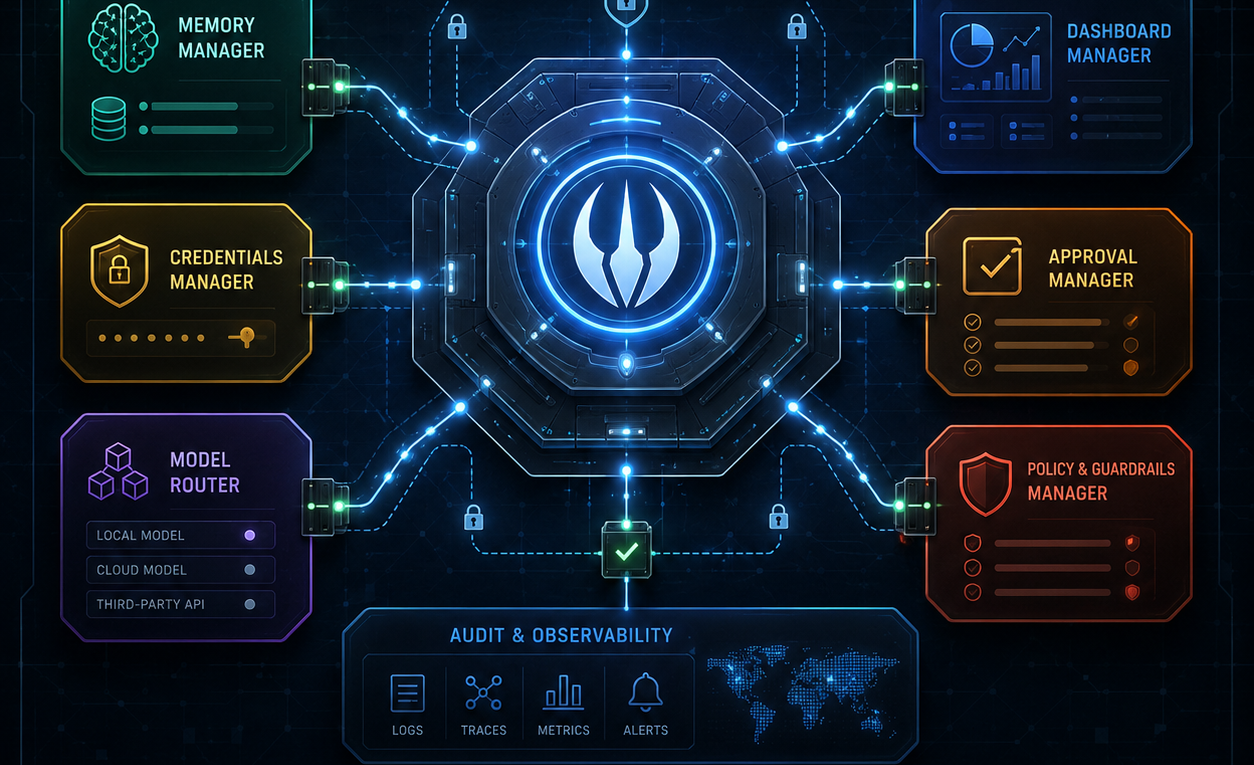
The project changed when I stopped treating every AI system as a general-purpose assistant. Giving each manager a defined responsibility, operating lane and escalation path made the overall system easier to understand and operate.
Part 5 — Managers Need Memory
Published June 29, 2026
Managers Need Memory: Building Feedback Loops Into My AI Operations
A manager cannot improve if every task begins without history. This article examines the state files, reports, feedback loops and operating memory needed to keep AI managers from repeatedly rediscovering the same lessons.
Part 6 — Safe Write Access
Published July 8, 2026
Safe Write Access: Why My AI Managers Had to Earn Permission
Read access and write access are not the same level of trust. I describe how dry runs, previews, narrow scopes, validation and human approval helped my AI managers earn permission to make controlled changes.
Part 7 — Smaller Keys, Clearer Lanes
Published July 12, 2026
Smaller Keys, Clearer Lanes: How I Split Work Across My AI Managers
Shared credentials made responsibility harder to see. Splitting access across smaller keys and separate manager lanes made permissions easier to reason about, failures easier to diagnose and operational ownership clearer.
Part 8 — The Model Is Part of the Permission Boundary
Published July 18, 2026
The Model Is Part of the Permission Boundary: Routing AI Work by Risk and Trust
Model selection became part of the permission boundary once OpenClaw began interpreting operational evidence and preparing guarded work. This article explains why task difficulty, judgment risk and operational consequence now determine which model is trusted at each stage.
Part 9 — OpenClaw Had the Data. It Still Misread the System.
Published July 26, 2026
OpenClaw Had the Data. It Still Misread the System.
Accurate data still produced the wrong operational conclusion when historical evidence was treated as current impact. This article connects a Solar Manager false alert, workspace reconstruction and runtime model verification to the larger problem of operational intelligence.
Part 10 — Getting Started With OpenClaw
Getting Started with OpenClaw: Build Trust Before You Build Agents
Published August 15, 2026. Part 10 steps back from the evolution of my system and gives new builders a practical starting point: begin with the computer you already own, learn Docker and Git, solve one real problem, and let trust and complexity grow only when the work demands it.
The Hardware I Actually Use for Local AI
Once OpenClaw was useful enough to justify local inference, I ended up running models on two very different systems: a 32GB Mac mini M4 and a Windows PC with an RTX 3060. I wrote up the real trade-offs around unified memory, VRAM, power, CUDA and what I would buy again in Mac mini M4 vs RTX 3060 PC for Local AI.
If you are just getting started, do not treat that as a shopping list. Part 2 explains why I would start with a spare computer or inexpensive dedicated host first, then buy heavier local-AI hardware only when the workload justifies it.
About This Series
These articles are not a finished blueprint for autonomous AI. They are an operating record of what I built, what failed, what I changed and how I decided when an AI manager had earned more responsibility.
The series will continue to grow as OpenClaw takes on new workflows, new managers and new trust boundaries.
Bookmark this page to follow the project in chronological order.