
Bluetti AC180 vs. EcoFlow Delta 3: Real-World Review and Why I Favor the EcoFlow
If you’re researching the best portable power stations in 2025, two names keep coming up: the Bluetti AC180 and the EcoFlow Delta 3. Both are highly capable solar generators designed for backup power, camping, and off-grid use. I’ve been testing both side by side in real-world conditions — charging, running appliances, and using them during actual outages.
In this EcoFlow vs Bluetti review, I’ll break down where each one shines, but more importantly, why I consistently reach for the EcoFlow Delta 3 when reliability and speed matter most.
The short answer: the EcoFlow Delta 3 is the better choice for most people because it charges faster, supports more solar input, has a stronger app, and fits better into a connected home energy setup. The Bluetti AC180 is still a solid pick if rugged build quality and lower sale pricing matter more.
Key Takeaways
- EcoFlow Delta 3 wins on charging speed, solar input, app control, and everyday usability.
- Bluetti AC180 is still a strong value pick when price and rugged build matter most.
- Both units can handle common backup-power and camping loads, but EcoFlow feels easier to manage day to day.
- For smart-home or solar-heavy setups, EcoFlow has the stronger ecosystem.
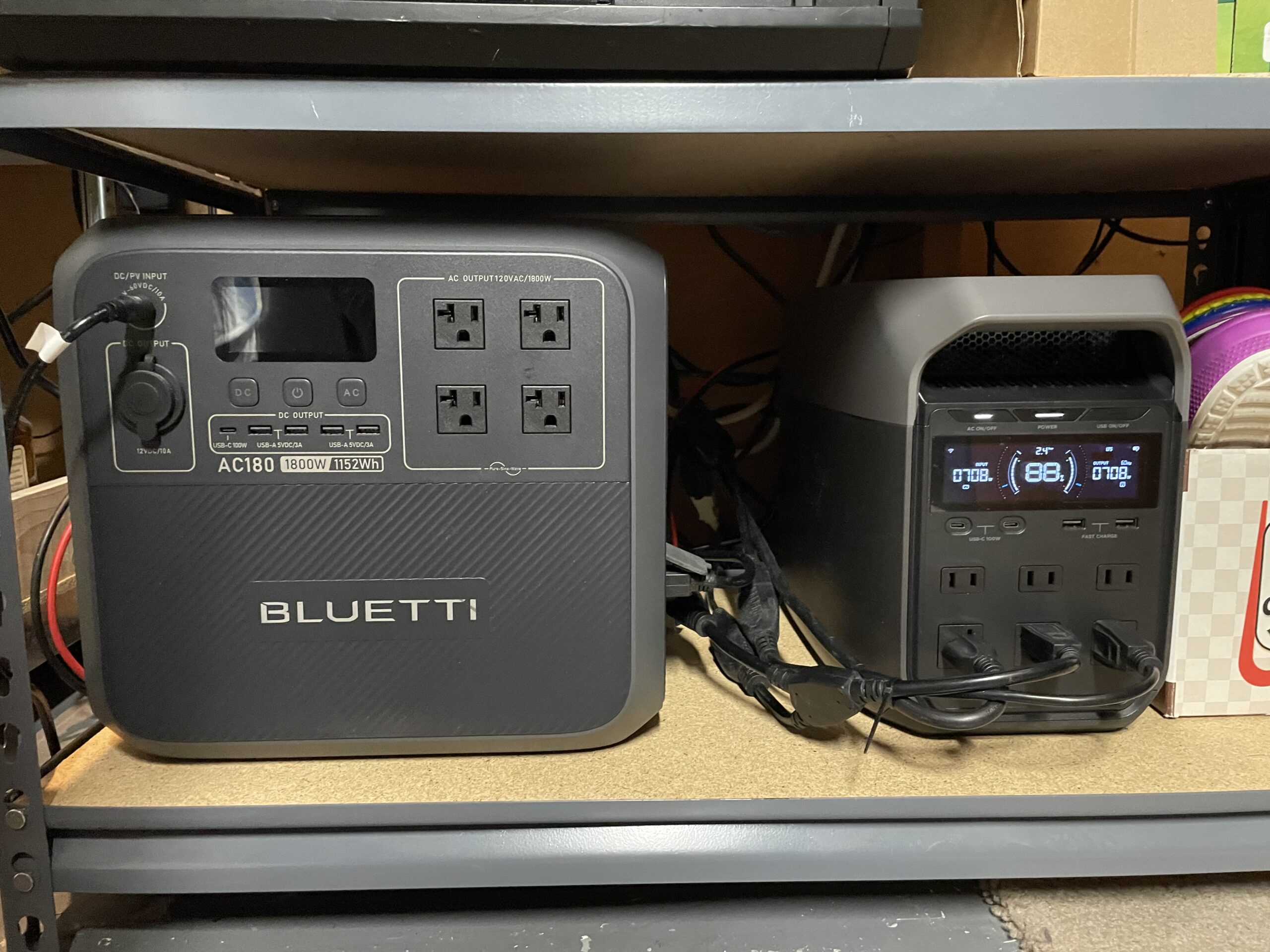
First Impressions
- Bluetti AC180: Right out of the box, Bluetti continues their tradition of sturdy builds. It feels rugged, heavy-duty, and reliable. It’s a unit you wouldn’t worry about bumping around in the back of a truck or leaving out on a job site.
- EcoFlow Delta 3: EcoFlow, on the other hand, leans more into sleek design and usability. The Delta 3 feels refined — not just in appearance, but also in the way the interface and companion app integrate into daily use. EcoFlow clearly thought about how someone would live with the generator, not just how it would perform in a lab test.
App Experience: Where EcoFlow Pulls Ahead
One of the biggest differences between the Bluetti AC180 and the EcoFlow Delta 3 is the app. Bluetti has made strides in recent years, but its app still feels fairly basic. You can monitor battery levels, adjust a few settings, and that’s about it. It works, but it doesn’t add much value beyond what you already see on the front display.
EcoFlow’s app, on the other hand, is in a different league. It gives you real-time monitoring of input and output, estimated runtime, and charging times. You can remotely control the unit, switch charging modes, and even schedule when it should draw power. Firmware updates are seamless, which means the device actually gets smarter and more efficient over time.
Another standout feature is how EcoFlow integrates with smart home systems. If you’re already running smart plugs, solar setups, or even a whole-home backup configuration, the app ties it all together. It doesn’t feel like a “gadget” — it feels like part of your home’s energy ecosystem.
For me, this is one of the biggest reasons I reach for the EcoFlow Delta 3. The app turns a portable power station into a connected energy management tool, and that’s something Bluetti just hasn’t matched yet.
Charging Speed
This is one of the biggest differentiators.
- Bluetti AC180: It does a respectable job, charging reasonably quickly for its size. But when you’re trying to top it up from wall power, you’ll notice it’s not exactly speedy.
- EcoFlow Delta 3: This is where EcoFlow shines. Their X-Stream fast charging technology means you can go from 0–80% in under an hour. That’s huge in real-world scenarios — whether you’re heading out the door for a camping trip or just got hit with a power outage and need backup in a hurry. It’s the difference between convenience and waiting around.
Battery Capacity and Output
- Bluetti AC180: It offers 1,152Wh of capacity with a 1,800W AC output (2,700W surge). That’s more than enough for small appliances, lights, laptops, or even a CPAP machine overnight.
- EcoFlow Delta 3: Comes in a touch higher with 1,261Wh of capacity and a 1,800W AC output (2,400W surge). On paper, they look nearly identical. But in practice, EcoFlow’s power management feels more efficient. I noticed less drop-off and smoother handling when running higher draw items like coffee makers or space heaters.
Solar Input
- Bluetti AC180: Accepts up to 500W of solar input, which isn’t bad, but you’ll need strong sun and the right panels to get close to that.
- EcoFlow Delta 3: Can handle up to 800W of solar input, giving you much more flexibility. If you’re really serious about off-grid solar, this matters. The faster you can recharge on solar, the less downtime you’ll have.
Portability and Use
- Bluetti AC180: Heavier and bulkier at around 35 lbs. It’s manageable, but not something you’ll want to move frequently.
- EcoFlow Delta 3: Still hefty, but a bit easier to grab and go. The handles feel better designed, and EcoFlow seems to understand this isn’t just a “set it and forget it” machine — it’s something you’re going to carry around.
App and Ecosystem
- Bluetti: They’ve made strides with their app, but it can feel clunky at times. Basic monitoring and settings work fine, but there’s not much depth.
- EcoFlow: The app is one of the best in the industry. Real-time monitoring, remote control, firmware updates, and integration with smart home systems all work seamlessly. It’s more polished, and honestly, I enjoyed using it.
Noise and Heat
- Bluetti AC180: Fan noise kicks in fairly often, especially when charging. It’s not unbearable, but noticeable indoors.
- EcoFlow Delta 3: Quieter overall. The fan still runs under load, but EcoFlow’s cooling management feels more refined. Less heat, less noise.
Price and Value
Here’s where Bluetti usually wins. The AC180 often comes in at a lower price point, especially if you catch it on sale. If budget is your top concern, Bluetti makes a compelling case.
But when you weigh the charging speed, solar capacity, app experience, and overall usability, I think the EcoFlow Delta 3 justifies the extra spend.
Final Thoughts
Both of these solar generators are excellent choices. If you’re looking for solid build quality at a slightly lower price, the Bluetti AC180 won’t disappoint. But for me, the EcoFlow Delta 3 is the clear winner. The ability to When it comes to the Bluetti AC180 vs EcoFlow Delta 3, the differences aren’t just about specs on paper — they’re about real-world usability. Bluetti delivers rugged build quality at a budget-friendly price, making it a solid choice for those who want a dependable entry-level solar generator.
But if you’re serious about fast charging, higher solar input, and a seamless smart app experience, the EcoFlow Delta 3 stands out as the best portable power station of 2025. It charges faster, integrates more smoothly into daily life, and ultimately offers better long-term value.
Bluetti AC180 vs. EcoFlow Delta 3 Comparison
| Feature | Bluetti AC180 | EcoFlow Delta 3 |
|---|---|---|
| Battery Capacity | 1,152Wh | 1,261Wh |
| AC Output | 1,800W (2,700W surge) | 1,800W (2,400W surge) |
| Solar Input | Up to 500W | Up to 800W |
| Wall Charging Speed | Slower (3–4 hrs typical) | X-Stream Fast Charging: 0–80% in <1 hr |
| Weight | ~35 lbs | ~30 lbs |
| Noise Level | Louder under load | Quieter cooling system |
| App Experience | Functional, basic | Advanced, seamless, smart home ready |
| Build Quality | Rugged, industrial | Sleek, user-friendly |
| Price Point | Lower, budget-friendly | Higher, but better long-term value |
FAQ: EcoFlow Delta 3 vs Bluetti AC180
Q: Which is better, the EcoFlow Delta 3 or the Bluetti AC180?
A: Both are strong solar generators, but the EcoFlow Delta 3 is better overall thanks to its faster wall charging, higher solar input (800W vs 500W), and a more polished app experience. The Bluetti AC180 is a solid budget option if price is your main concern.
Q: How fast does the EcoFlow Delta 3 charge compared to the Bluetti AC180?
A: The EcoFlow Delta 3 uses X-Stream fast charging, reaching 0–80% in under an hour. The Bluetti AC180 typically takes 3–4 hours to reach a similar level when charging from a wall outlet.
Q: Which solar generator is best for camping in 2025?
A: For camping and outdoor trips, the EcoFlow Delta 3 is the best portable power station of 2025. It’s slightly lighter, charges faster from solar, and the app makes managing your power simple even while off-grid.
Q: Is the Bluetti AC180 worth it in 2025?
A: Yes. The Bluetti AC180 is worth considering if you want reliable backup power at a lower cost. It’s rugged and dependable, though it can’t match EcoFlow’s speed and flexibility.
Q: Can the EcoFlow Delta 3 run high-power appliances?
A: Yes. With 1,800W output (2,400W surge), the EcoFlow Delta 3 can run most household appliances like coffee makers, microwaves, CPAP machines, and even some power tools.
Where to Go Next
If you want more detail on living with the EcoFlow over time, read my EcoFlow DELTA 3 long-term review. If you are still deciding which class of power station fits your needs, the Portable Power Station Know IT Guyde walks through EcoFlow, BLUETTI, Jackery and the tradeoffs that matter.




Great comparisons! I appreciate how you highlighted the real-world performance of both units. It’s interesting to see how the EcoFlow Delta 3 stacks up, especially with its portability and fast charging. Makes me lean more towards the EcoFlow for my upcoming camping trips. Thanks for the detailed insights!