
HP Stream 14 in 2026: The Idea Was Better Than the Hardware
Originally published November 5, 2014. Updated for 2026.
2026 Buying Update: Skip the Old Stream Hardware
The HP Stream 14 was interesting because it tried to make a very inexpensive cloud-first Windows laptop useful with minimal hardware. I would not buy this old 2GB/32GB configuration today. If I were shopping for the same basic idea in 2026, I would start with a current Windows laptop with substantially more memory and SSD storage rather than chasing an old Stream listing.
See current 16GB / 512GB Windows laptops on Amazon (affiliate link). I have not personally tested every laptop in that search, so treat it as a current shopping starting point rather than a specific model endorsement.
Looking Back at the HP Stream 14
When I look back at the HP Stream 14 more than a decade later, I don’t really see an old laptop.
I see an idea that arrived before the hardware was ready for it.
The PC industry had already spent years experimenting with netbooks and inexpensive laptops. The thinking was sound: maybe people didn’t need a powerful computer sitting in front of them all the time.
The execution was usually the problem.
Too little memory. Too little storage. Slow processors. Cheap displays. Machines that were inexpensive because almost everything about them had been cut back.
The HP Stream was part of that same era, but I think its underlying idea was better than we gave it credit for.
What if more of the computer lived somewhere else?
Your files could be in OneDrive. Your applications could increasingly run in a browser. Calls could happen through Skype or Google Hangouts. If you needed a more powerful computer, you could remote into one.
The laptop itself didn’t have to carry your entire digital life.
That sounded like a compromise in 2014.
In 2026, it sounds pretty normal.
The Short Answer
The short answer: the HP Stream had the right idea and the wrong hardware.
The machine itself was heavily compromised, even when it was new. But the assumptions behind it — cloud storage, browser-based work, remote access and lightweight portable computing — aged remarkably well.
The HP Stream didn’t become the future. The way it expected us to use computers did.
Key Takeaways
- I bought the HP Stream 14 during Microsoft MVP Summit in 2014 because I needed an inexpensive laptop for writing and podcast work.
- It was part of the industry’s broader attempt to build inexpensive computers around increasingly cloud-based workflows.
- The hardware compromises were obvious even then, particularly 2GB of RAM and 32GB of storage.
- I liked the keyboard, the portability and the surprisingly decent audio/video experience.
- OneDrive, browser-based tools and remote access were central to how I used it.
- The Stream itself didn’t age particularly well, but the cloud-first philosophy behind it absolutely did.
- The industry ultimately went even further than the Stream imagined: for many people, the phone became their primary computer.
Why I Bought It
I wasn’t shopping for a technology experiment. I needed a laptop.
I was in the Seattle area for Microsoft MVP Summit and needed to finish a podcast post. My work laptop had restrictions that made that difficult, so I headed over to the Bellevue Microsoft Store looking for something inexpensive I could use during the trip. I also talked about the HP Stream in the same period on Surface Geeks 78.
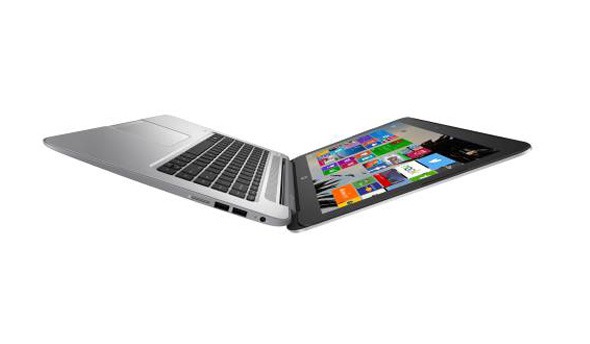
The HP Stream 14 caught my attention. It was thin, relatively light and inexpensive enough that I could justify buying it for the conference.
I took it back to the hotel, plugged it in and started running updates. About an hour later, even on slow hotel Wi-Fi, I was working.
That’s really where the original review started.
What $299-Class Computing Felt Like in 2014
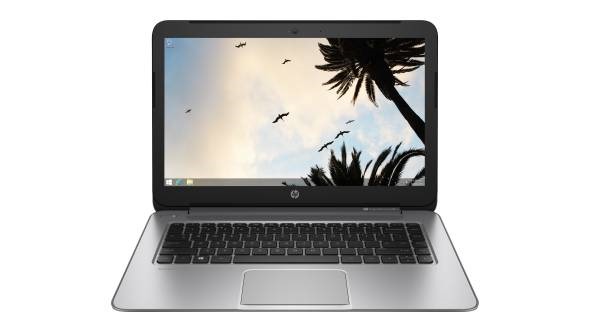
The Stream was definitely built to a price. Mine had a 14-inch 1366 × 768 display, an AMD A4 processor, 2GB of RAM, 32GB of eMMC storage, Windows 8.1, microSD expansion, HDMI, USB 3.0 and USB 2.0, and Bluetooth and Wi-Fi.
The specification that mattered most was probably the 2GB of RAM. It felt slow. I knew that almost immediately.
The storage situation wasn’t much better. After getting everything configured, I had less than 10GB free. That meant a microSD card was going to be part of the plan.
But I also knew what kind of machine I had purchased. I wasn’t expecting a workstation.
The Keyboard Was Better Than It Had Any Right to Be
One thing I really liked was the keyboard. It was quiet, comfortable and surprisingly good for an inexpensive laptop. I gave it an A+ in the original review.
That mattered because writing was one of the primary things I needed the machine to do. It’s also a reminder of something I’ve seen over and over with technology: sometimes the parts you interact with every day matter more than the specification sheet.
A cheap laptop with a terrible keyboard is still a terrible writing machine. The Stream got that part right.
It Was Better at Communication Than I Expected
The audio and video experience surprised me too. The front-facing Beats-branded speakers sounded pretty good for Skype and Google Hangouts, especially compared with some more expensive laptops I had used.
Nothing about it was high-end. It just did some of the basic things I needed reasonably well. For travel, writing, browser work and communication, that mattered.
The Cloud Was Really the Point
The most interesting part of the Stream was the way it expected you to use it.
Local storage was tiny. OneDrive was part of the package. Browser-based applications made sense. Remote access made sense. I tested TeamViewer and thought about Remote Desktop and other ways to get back to more powerful systems.
The Stream didn’t need to be the most powerful computer I owned. It needed to get me to everything else.
That was the clever part.
Netbooks Had the Same Idea — Mostly
The Stream came after years of the PC industry trying to make inexpensive, lightweight computers work. Netbooks were probably the most obvious example.
I always liked the idea of netbooks more than I liked most netbooks. They were portable, they were cheap, and they acknowledged that not every computing task needed a big, expensive machine.
But manufacturers usually interpreted “people need less local hardware” as “people will tolerate a bad computer.” That distinction is the whole story. The concept was ahead of its time. The hardware wasn’t.
Then the Rest of Computing Caught Up
Fast-forward to 2026 and many of the Stream’s assumptions are just normal computing. Files synchronize through cloud storage as a matter of course. Video meetings are routine. Applications increasingly depend on services running somewhere else. The laptop you’re carrying doesn’t necessarily need to be the most powerful machine you own.
Even my own setup reflects that — I’ve talked about using a MacBook Pro for personal work while preferring a dedicated Windows PC for podcast production. Different computers doing different jobs seems obvious now.
The Stream was already pushing in that direction in 2014.
And Then the Phone Took Over
There was another shift that turned out to be even bigger. For a lot of people, the PC stopped being the center of their digital life altogether.
The phone took over. Email, messaging, banking, shopping, photos, navigation, social media, video, cloud storage and a surprising amount of work now happen on a phone first.
That may be the most interesting part of looking back at the Stream. It was trying to make the PC smaller, cheaper and more dependent on services somewhere else. The market went further than that — a lot of people decided they didn’t need a PC for many of those tasks at all. Their phone became the primary computer, and the laptop became something they reached for when they needed a bigger screen, a real keyboard or specialized software.
The Stream ended up sitting right in the middle of that transition. It was trying to rethink the PC while the phone was busy redefining personal computing.
The Chromebook Comparison Was the Real Story
At the time, the obvious comparison was the Chromebook. That was part of what made the Stream interesting.
Google was essentially saying: you don’t need a traditional Windows PC for everything. Microsoft’s answer was: maybe not — but what if we give you Windows at roughly the same price?
The Stream was one version of that answer. Looking back, I think ChromeOS had the cleaner philosophy because it was designed around that lighter model from the beginning. The Stream was still trying to carry Windows along for the ride, and with 2GB of RAM and 32GB of storage, that was asking a lot.
What I Would Take Away From It Today
I wouldn’t spend much time asking whether someone should buy an HP Stream 14 today. That’s not the interesting question.
The interesting question is what the machine got right. It understood that local storage was becoming less important, browsers were becoming more important, remote services were becoming more capable, communication was moving online, and lightweight portable computers could handle a surprising amount of everyday work.
All of that happened. And then computing moved even further away from the traditional PC — for many people, the phone now handles the daily jobs that once required sitting down at a computer. The PC didn’t disappear, but its role changed.
That makes the Stream more interesting historically than technically. It was pointing toward a world where the device in front of you didn’t have to contain everything.
Would I Still Do Anything With It?
Maybe.
If I still had the HP Stream 14 sitting on a shelf, I could see myself pulling it out and trying to put a lightweight version of Linux on it. Not because I think that would suddenly make it a great modern laptop — it wouldn’t. I’d do it because that’s exactly the kind of experiment that makes old hardware interesting.
Could I strip away some of the overhead and turn it into a useful little browser terminal? A remote-access machine? A lightweight Linux box for the garage, the workshop, or another room where I just need a keyboard, a display and a browser?
I’d probably want to find out. And in a strange way, that would bring the Stream right back to the idea it started with — a simple computer that doesn’t need to do everything locally. It just needs to get you where you want to go.
Looking Back
The HP Stream wasn’t a great laptop. But I don’t think that means it was a bad idea.
The industry spent years experimenting with netbooks and inexpensive computers and often concluded that consumers didn’t really want them. I think consumers just didn’t want bad computers. They wanted inexpensive, portable devices that could get them to their files, applications, communications and the rest of their digital life. The technology just needed time to catch up — and then the definition of the computer changed underneath us.
So the HP Stream itself didn’t become the future. Its assumptions about where computing was going did.
Looking back, I think the industry had the right idea — it just tried to deliver it before the hardware and software were ready.
What piece of tech did you own that was a lousy product but, looking back, had a really good idea behind it?




It is nice information, One must give a chance to http://WWW.facebook.com/25dollarsupport or http://www.25dollarsupport.com , which is the best option in present crowded market. Quite dependable and cost effective.
Hey Jim, thanks for the in-depth review! Really appreciate how you broke down the specs and shared your hands-on experience with the HP Stream 14. The thin design and quiet keyboard sound perfect for on-the-go use. I’ve read elsewhere that the battery life might struggle a bit under heavier tasks. What’s your take on that? Looking forward to hearing more from you!