
The iDevices iGrill Mini Hands On Review
iDevices iGrill Mini Review: Is This Bluetooth Meat Thermometer Still Useful in 2026?
Originally published December 2, 2014. Updated for 2026.
2026 update: I originally wrote this review in December 2014 after using the iDevices iGrill Mini to cook my Thanksgiving turkey. More than a decade later, I don’t use it for most of my grilling anymore – today I use a MEATER, a fully wireless probe system. But looking back at the iGrill Mini in 2026 is a good reminder that it got the core idea right early: put a probe in the food, watch the temperature from your phone, and get an alert when dinner’s ready.
The branding has changed since then, too. Weber acquired the iGrill product line, so the iGrill Mini now lives in Weber’s ecosystem rather than the original iDevices one.
Short Answer: Is the iGrill Mini Still Useful in 2026?
The short answer: yes. If you already own an iGrill Mini and it still connects reliably, keep using it.
Where it shows its age is in how it gets that information back to you – a wired probe, a small Bluetooth transmitter, single-probe operation. I moved to MEATER because I prefer the wireless-probe experience, not because the iGrill Mini stopped doing its job. The fundamental value hasn’t changed: tell me what’s happening inside the food.
Key Takeaways
- The iGrill Mini remains a capable single-probe Bluetooth meat thermometer if yours is still working.
- Weber now owns the iGrill ecosystem; it originally launched under iDevices.
- I moved to MEATER for my own grilling because I prefer a wireless probe over a wired one.
- Wired probe, single-probe operation, and Bluetooth range are what feel dated today – not the core function.
- We’ve covered MEATER, including the MEATER Block, on Home Gadget Geeks 615.
- Current USDA guidance calls for turkey to reach 165°F internally, checked in multiple spots on a whole bird.
My Original iGrill Mini Experience
One of the reasons I love podcasting is how much I learn from guests. Back in 2014, I interviewed Ryan Parker (@TheRyankParker) of Food Craftsmen on Home Gadget Geeks 193. I walked him through my BBQ bacon-wrapped turkey method and asked what I could do to take it up a notch. His answer was the iDevices iGrill Mini.
I ordered an iDevices iGrill Mini just before Thanksgiving for $38.98 and put it to work almost immediately.
Setup, Then and Now
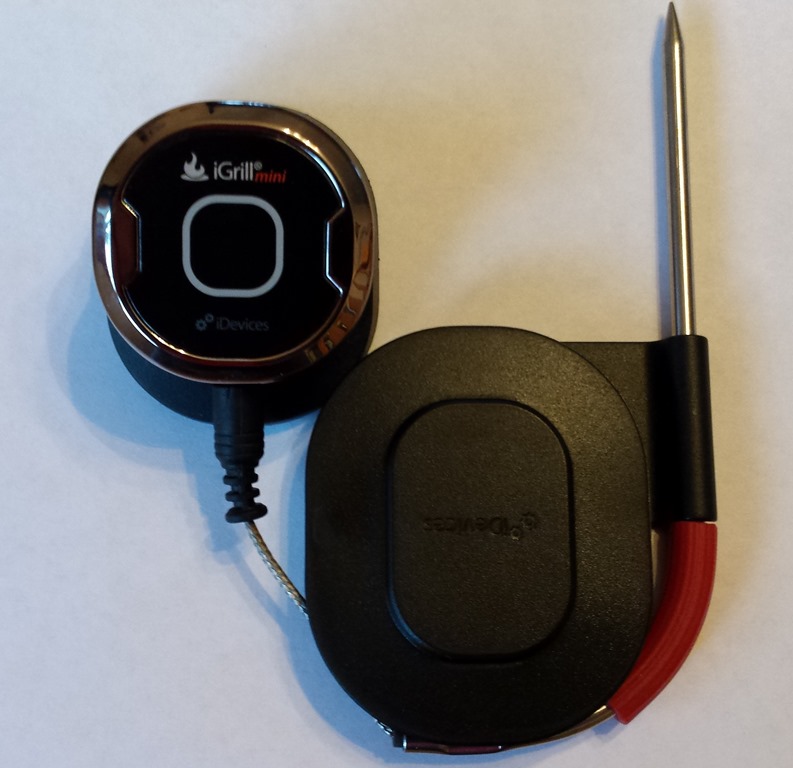
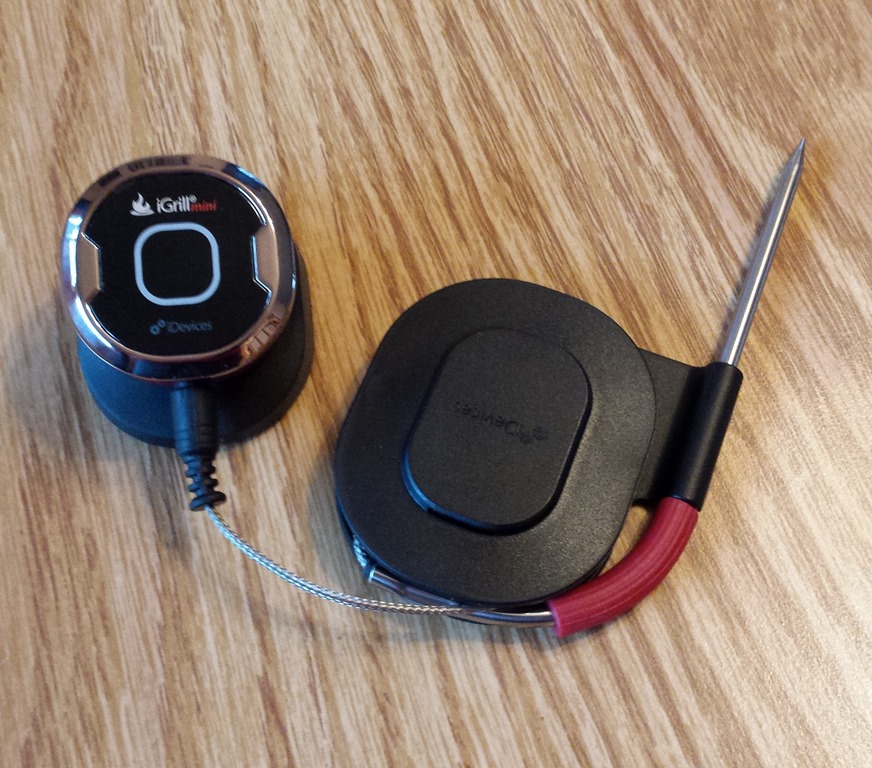
Setup was about as simple as it gets: pull the battery strip from the sending unit, unwind the probe and cable, plug the probe into the transmitter, turn it on, and pair it over Bluetooth in the iDevices app.
Today that last part looks different – Weber now owns the iGrill product line, still provides iGrill Mini product and pairing information, and the Weber iGrill app remains available.
But the underlying steps are the same ones any leave-in probe thermometer still follows: probe in the food, phone paired, target temperature set, alert when it’s close.
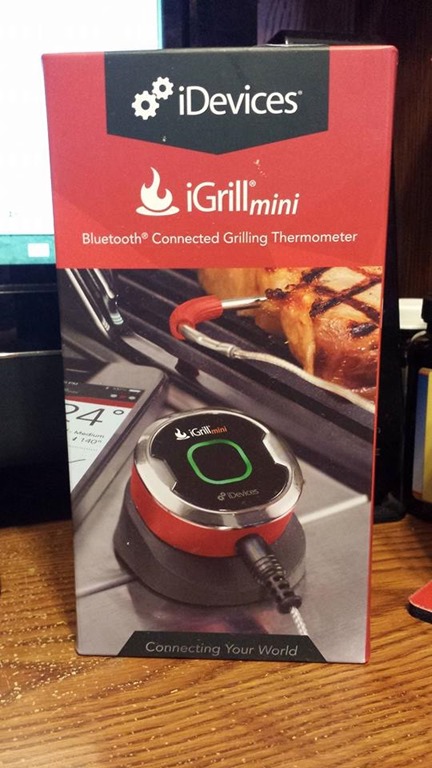
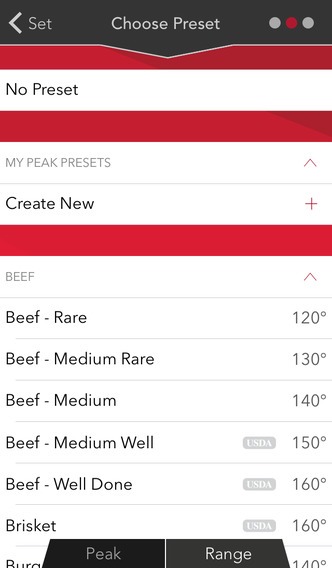
Original 2014 Photos and App Screenshots
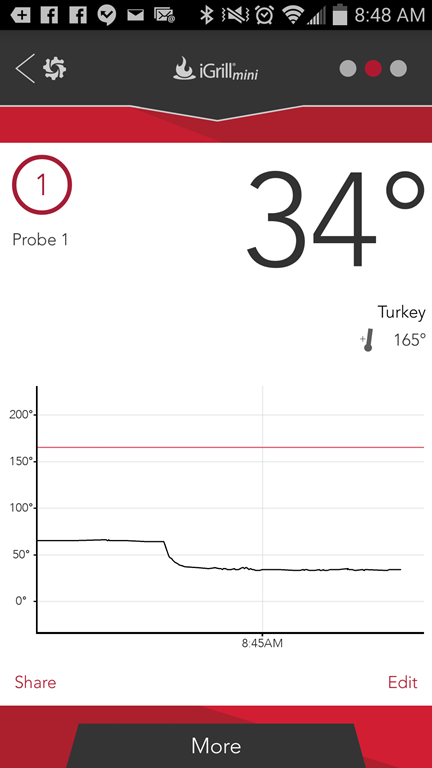
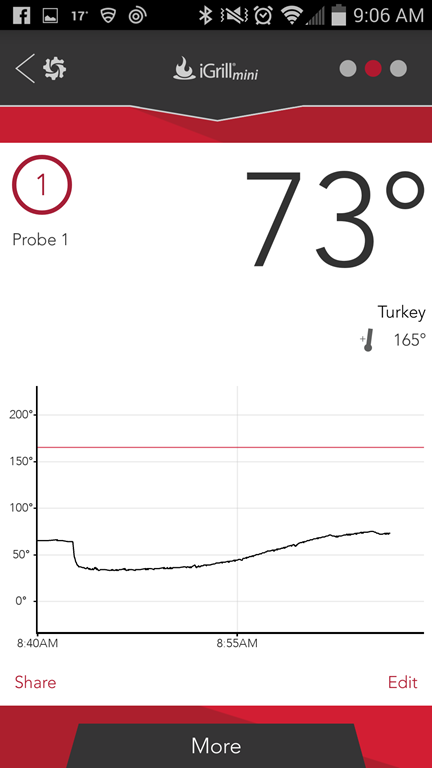
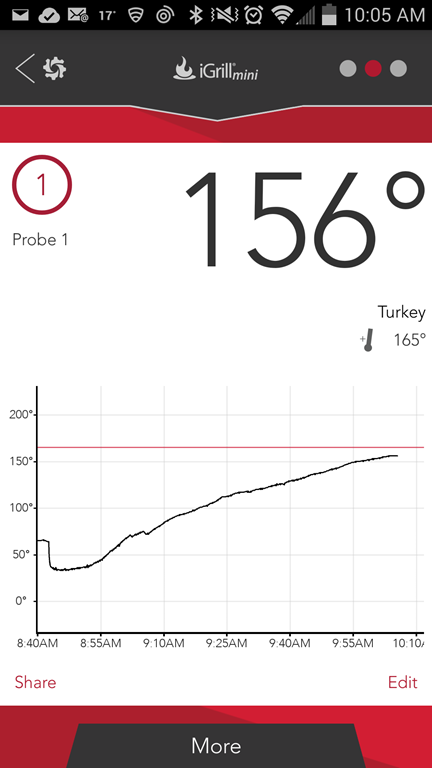
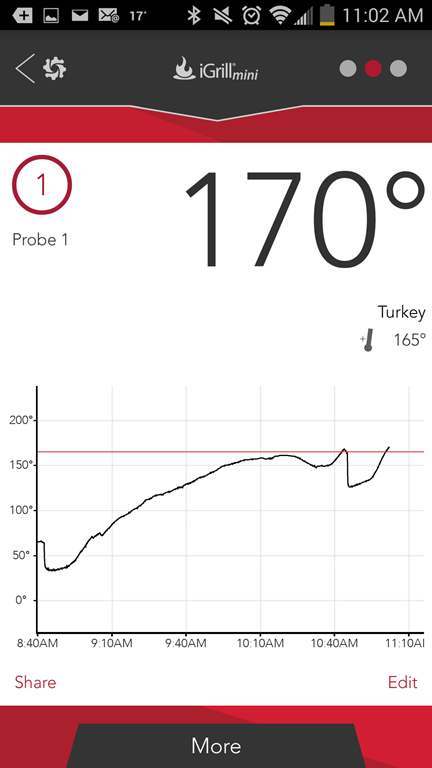
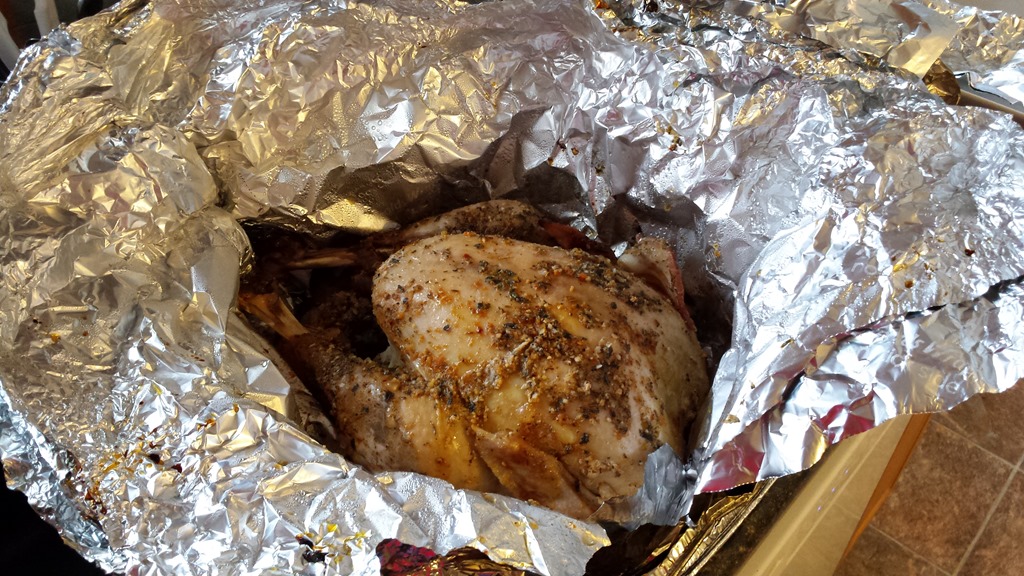
These are the original images from the 2014 hands-on cook, preserved with the historical review.
 |
 |
 |

 |
 |
 |
 |
 |
 |
Using It for My Thanksgiving Turkey
For my original test, I put the probe into one of the turkeys, closed the grill, and went back inside to watch the temperature from my phone. I set the target to 170°F at the time.
2026 food-safety note: Current USDA guidance calls for turkey to reach a safe minimum internal temperature of 165°F, checked in multiple locations on a whole bird rather than relying on a single probe placement.
That last point is really the limitation of any single-probe system – it only tells you what’s happening where the probe is. A large turkey, brisket, or pork shoulder can vary noticeably from one area to another.
I Accidentally Learned Something About My Grill
One of the more useful things that came out of that first cook had nothing to do with Bluetooth. When I moved the probe from one turkey to the other, I watched the temperature drop and realized one side of my grill was running hotter than the other.
That’s still an underrated benefit of putting sensors around a grill or smoker – you start learning how the cooker itself behaves: hot spots, recovery time after opening the lid, the gap between what the grill thermometer says and what’s actually happening near the food. That’s just as useful whether the thermometer is from 2014 or 2026.
I used the iGrill Mini again shortly after, for a Christmas ham cooked indoors, and it worked just as well there.
From iGrill to MEATER: What Changed for Me
This is the biggest addition to the original review. I eventually moved from the iGrill Mini to MEATER for my own grilling – not because measuring temperature changed, but because the experience around it got better.
With the iGrill Mini, the probe is wired to a small transmitter that sits near the grill:
Meat -> probe -> cable -> transmitter -> Bluetooth -> phone
With MEATER, the probe itself is wireless:
Meat -> wireless probe -> app
That’s a smaller change on paper than it feels like in practice. There’s no cable to route around the lid, less hardware sitting next to the grill, and multi-probe cooks are far more natural.
We’ve talked about that shift on Home Gadget Geeks. In HGG615 with Gavin Campbell, we discussed the MEATER Block and the value of running multiple probes for grilling and smoking. That’s where my setup is today.
But I don’t want to rewrite history here – the MEATER is a better fit for how I grill now. The iGrill Mini was a very good fit for how I grilled in 2014, and that’s still true if yours is still working.
What the iGrill Mini Still Does Well
It solves one clear problem. It’s not trying to manage the whole cook – just measure temperature and tell you what’s happening, which means less guesswork and less lid-lifting.
It’s well suited to longer cooks. Turkey, ham, pork shoulder – anything with a long leave-in window is where a probe thermometer earns its keep, wired or not.
A working one is still worth using. If you’ve got an iGrill Mini sitting in a drawer, I’d try it before buying something new. Fresh battery, check the probe, see if it still connects. The physics of measuring food temperature hasn’t gotten old.
Where It Shows Its Age
The wired probe. After getting used to MEATER, this is the thing I’d notice first going back – the probe cable works fine, it’s just less convenient than not having one.
One probe. Fine for a single cook. For multiple pieces of meat or different zones on a smoker, having more than one probe tells you a lot more.
Bluetooth range and app dependency. The iGrill Mini comes from the Bluetooth-first generation of connected cooking gear, so distance, walls, and where your phone is all matter more than they do with newer systems.
Should You Buy an iGrill Mini in 2026?
If you already own one: use it. If the probe reads accurately, the battery’s good, and it connects reliably where you grill, there’s no real reason to replace it.
If you’re buying something new: I’d look at a modern wireless-probe system first. That’s what I ended up doing myself. If you want to see more of what that setup looks like, Home Gadget Geeks 615 with Gavin Campbell covers the MEATER Block and multi-probe grilling in more depth.
Products and Related Gear
iGrill Mini – The original product reviewed here: a compact, single-probe Bluetooth meat thermometer. The line is now part of Weber’s grilling ecosystem.
MEATER – What I use for my own grilling today. The main practical difference is a fully wireless probe.
MEATER Block – Covered with Gavin Campbell on Home Gadget Geeks 615, focused on multi-probe grilling and smoking.
Frequently Asked Questions
Does the iDevices iGrill Mini still work in 2026?
A working unit can still do its basic job: monitor temperature from a probe and send it to your phone over Bluetooth.
Is iDevices still behind the iGrill Mini?
No – the product line is now part of Weber.
Do I still use the iGrill Mini?
Not for my regular grilling. I use MEATER today because I prefer the wireless probe.
Why did I switch to MEATER?
Mainly convenience – no cable between the probe and a transmitter, and an easier time running multiple probes.
Have you talked about MEATER on Home Gadget Geeks?
Yes – HGG615 with Gavin Campbell covers the MEATER Block and multi-probe use for grilling and smoking.
Is the iGrill Mini obsolete?
I wouldn’t call it that. It’s an older approach to a problem that still exists. If yours works and does what you need, keep using it.
What temperature should turkey reach?
Current USDA guidance calls for a minimum internal temperature of 165°F, checked in multiple spots on a whole bird.
My Take More Than a Decade Later
In 2014, I put an iGrill Mini probe into a turkey, walked inside, and watched the temperature on my phone. That felt pretty slick at the time.
Today I use MEATER and don’t deal with a wire between the probe and a transmitter. That part’s better.
But what actually matters hasn’t moved: I still want to know what’s happening inside the food without opening the grill. The technology around that idea has gotten better – wireless probes, more sensors, smarter apps – but the iGrill Mini got the fundamental idea right more than a decade ago. If you’ve still got one that works, I’d have no problem putting it back into service.
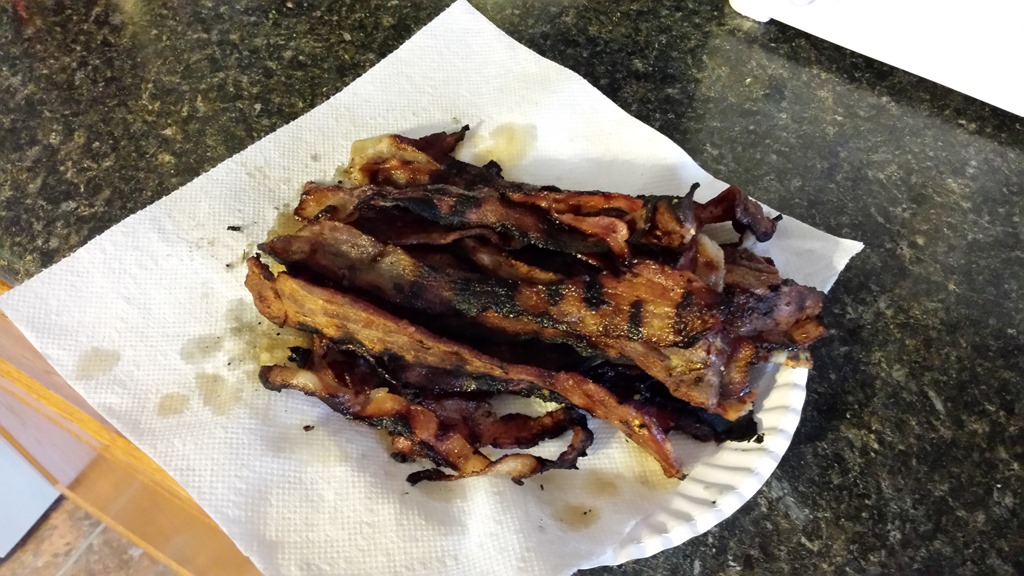
Full disclosure from my original review: I still didn’t use the probe to cook the bacon.




2 thoughts on “The iDevices iGrill Mini Hands On Review”